Self-checkout for gas stations
December 2024 — February 2025
Product designer in a cross-functional team

Designed the touch self-checkout UI for gas stations from scratch—flow logic through control sizing—with a clear payment path and fewer queues
Self-checkout for gas stations
December 2024 — February 2025
Product designer in a cross-functional team
Designed the touch self-checkout UI for gas stations from scratch—flow logic through control sizing—with a clear payment path and fewer queues
Goal
Reduce operator load and let customers serve themselves

Make fuel payment faster and clearer, even for first-time users
Problem
Earlier solutions felt overloaded: unclear steps and high error risk
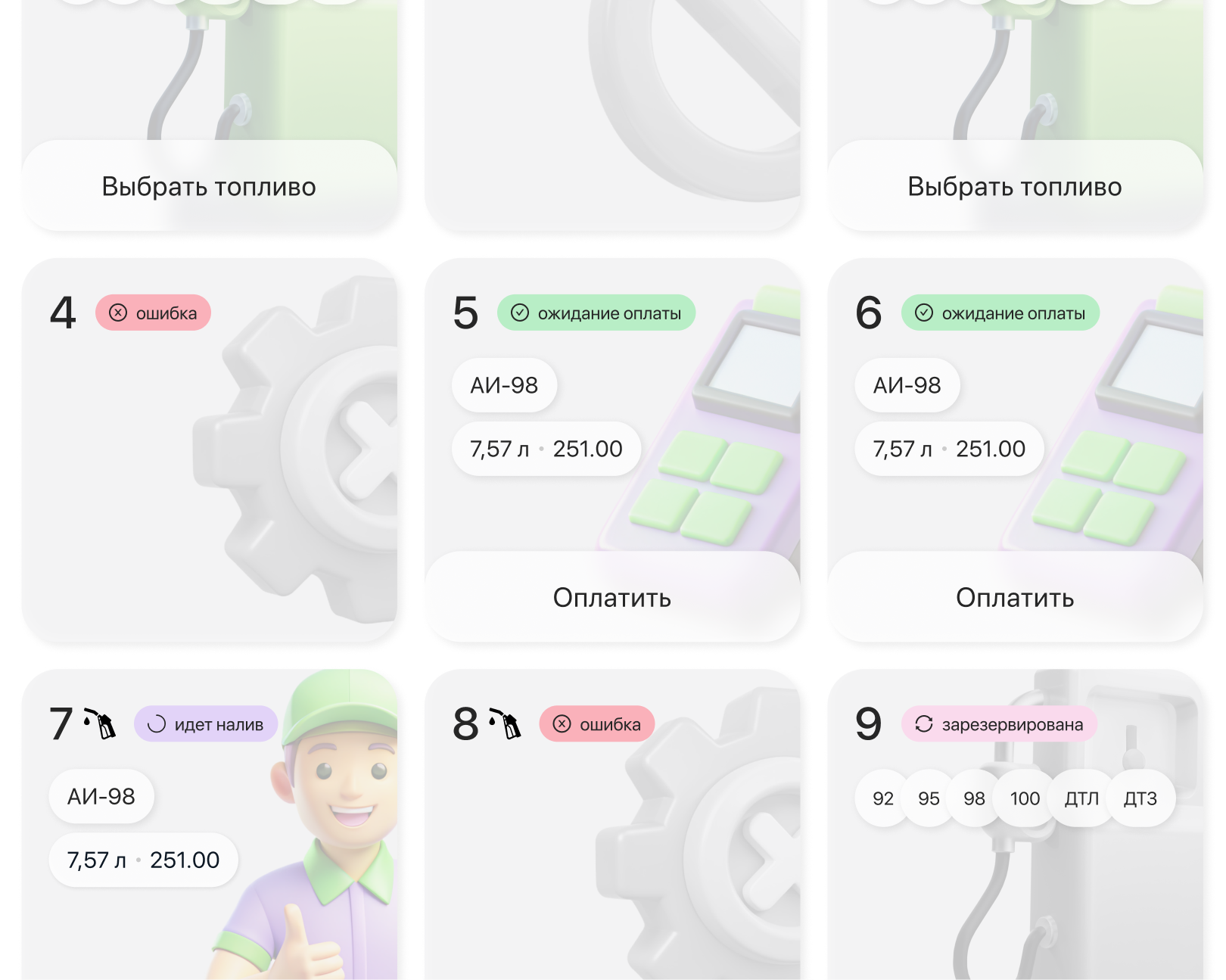
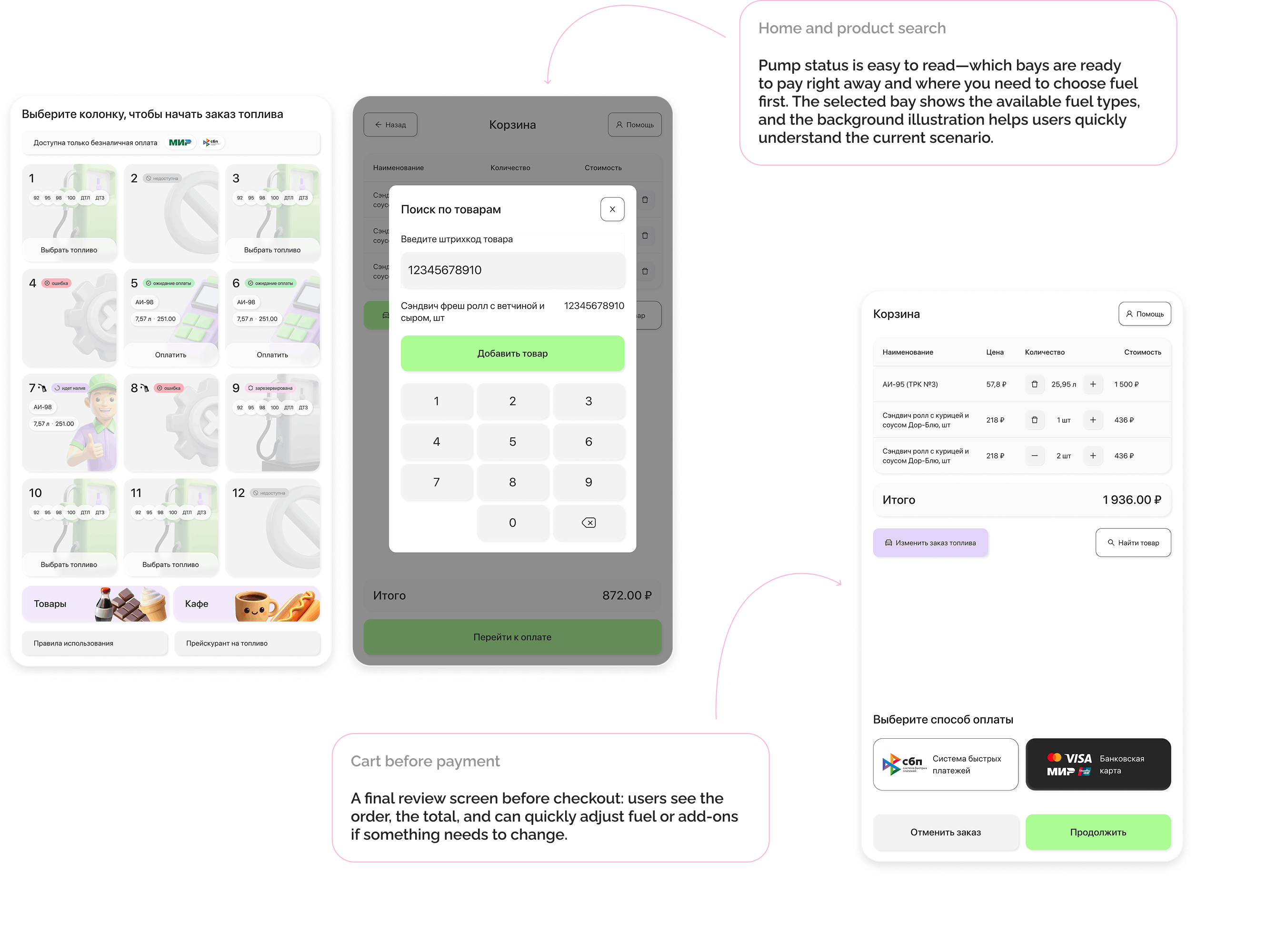
Customers could not see which pump was free or why a pump could not be selected at a given moment
Result
A coherent touch payment flow focused on speed and predictability
Validated on a test rig and simplified iteratively to reduce confusion and speed service
01
Task
Define a clear self-service model for gas stations: reduce clutter and make key actions obvious from the first screen

What I did
Reviewed gas-station and retail checkout patterns—kept what worked, avoided what failed
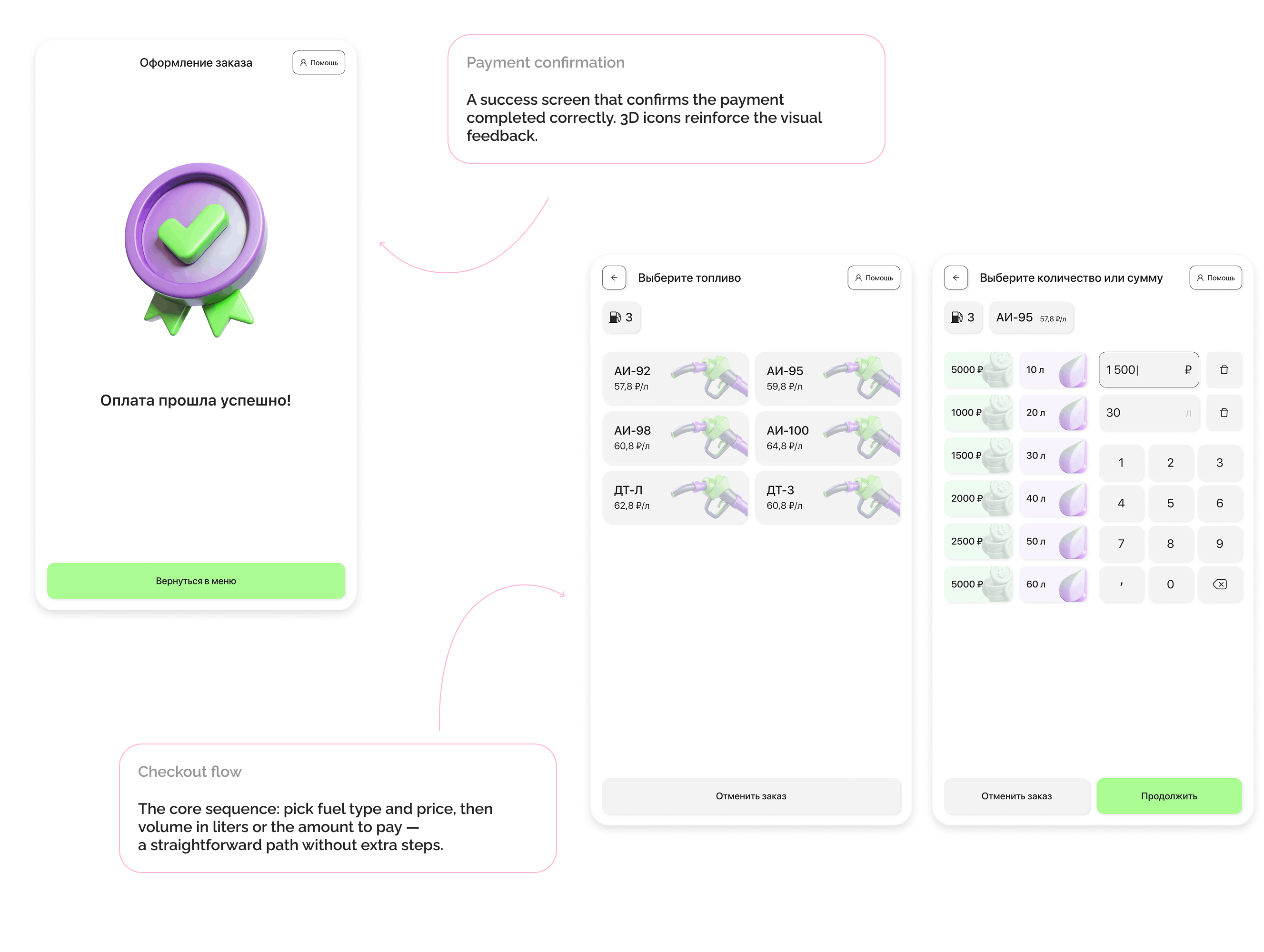
Mapped the core journey: choose pump, payment type, confirm, finish
Prioritized what must be visible immediately vs only in context
Outcome
A calmer screen structure without duplicate blocks
Pump state logic explains why selection is available or blocked
Baseline UX principles captured for the next design and test cycles
02
Task
Keep the touch UI reliable in real station conditions: fast actions, fewer mistakes, clear feedback
What I did
Designed the UI from scratch—touch targets, hierarchy, and transitions
Prepared key states and copy: pump busy/free, errors, waiting, confirmation
Regular rig tests in the office and fixes from observations
Outcome
Fewer unnecessary steps in the typical fuel payment flow
More predictable UI—users understand what happens at each step
Positioned as a tool to shorten queues and reduce operator load